
Special Korean Cuisine: Jangjorim
"Jangjorim" is an exceptionally delicious Korean dish. The rich seasoning and vegetables blend exquisitely with the meat, creating a deep flavor. The meat becomes tender and its umami condenses through simmering, whetting your appetite. The crisp texture of the vegetables adds a nice accent, resulting in a well-balanced dish. It pairs perfectly with rice, providing a truly satisfying meal. Although a traditional Korean dish, it is loved worldwide, and its deep taste and flavor are definitely worth trying.
While traditionally made with beef, it is also delicious with pork.
Jangjorim is similar to Japanese Yamato-ni (beef simmered in soy sauce).
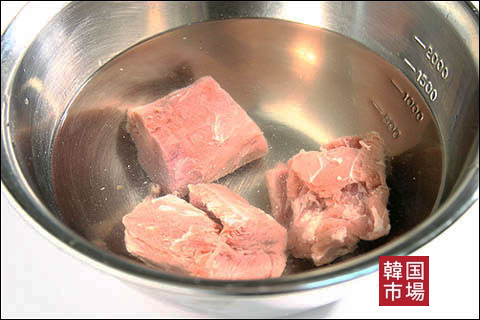
1. Draining blood from pork
Soak the pork (300g fillet) in water for about 30 minutes to drain the blood.
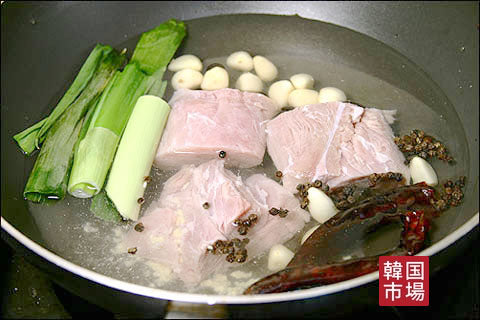
2. Cooking Jangjorim
Add water (5 cups), the drained pork, garlic (1 handful), green onion (1 stalk), dried chili peppers (2), whole black pepper (1), and ginger powder (0.5) to a pot and cook for 20 minutes.

3. Skimming and cooking quail eggs
Remove any foam that rises to the surface during cooking. In a separate pot, boil quail eggs (20) in lightly salted water for 10 minutes.
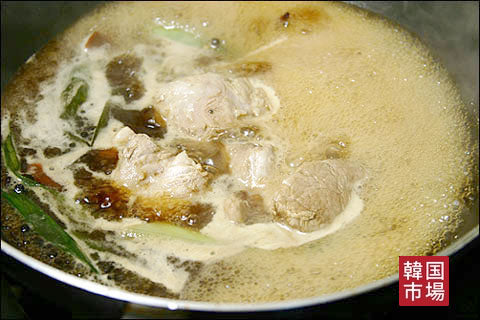
4. Finishing the broth
Add dark soy sauce (1/2 cup), mirin (1/2 cup), and sugar (2) and boil for another 10 minutes.
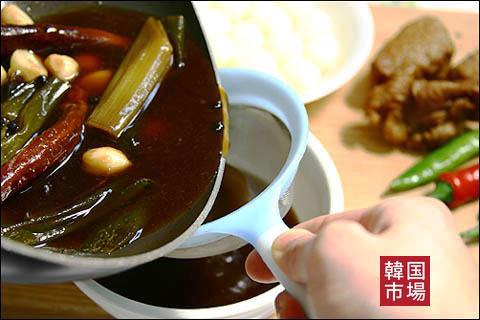
5. Completion of Jangjorim
Remove only the meat and shred it along the grain. Strain the broth using a tea strainer or similar tool.

6. Final preparation
Add the finely strained broth, pork, quail eggs, hot green chilies, and red chilies and simmer for about 5 minutes until done.

7. Variations
It's also delicious with shishito peppers or mushrooms. If making it with beef, it's good to use lean muscle meat.

![【宋家】一品のり缶 ギフトセット[8切x54枚(30g)X4缶入]](http://www.kankokuichiba.jp/cdn/shop/files/KS-4426-2405_9.jpg?v=1740377691&width=1100)
![【宋家】一品のり缶 ギフトセット[8切x54枚(30g)X2缶入]](http://www.kankokuichiba.jp/cdn/shop/files/KS-4427-240510_2.jpg?v=1740377693&width=1100)
![【宋家】一品のり缶 [8切x54枚(30g)]](http://www.kankokuichiba.jp/cdn/shop/files/KS-4424-2405_3.jpg?v=1740377695&width=1100)