
About Recipe Measurement Methods
Normally, when you open a cookbook in Japan or Korea, ingredient amounts are generally expressed in tablespoons (15cc) and teaspoons (5cc). In Korean households, however, a single dining spoon is used to standardize ingredient measurements, which has been lauded as "fresh," "simple," and "innovative."
This new measurement method, which makes daily cooking possible even without specialized cooking tools, has been adopted by many cookbook authors.
Origin Story
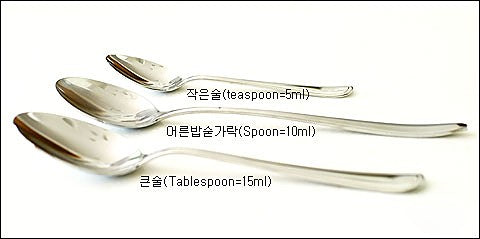
Foreign tableware includes tablespoons and teaspoons, which were introduced to Japan and Korea. However, in Japan, chopsticks are primarily used, and in Korea, there were mislabelings of dining spoons, making accurate measurement difficult.
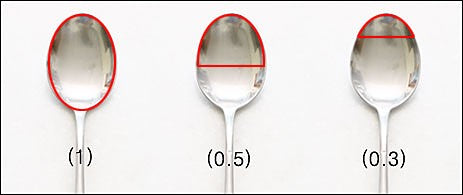
Therefore, starting in 2003, a measurement method using commonly available spoons was proposed and began to be introduced on blogs.
Korean Measurement Methods
There are three methods: measurement with an adult dining spoon, measurement with a paper cup, and measurement by hand. When cooking, these methods can be used to easily measure ingredients.
For example, Gochujang (1) refers to a slightly mounded scoop, while sugar (1) represents a level amount after lightly scooping with a spoon and gently shaking it from side to side.
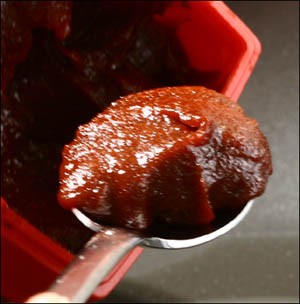
Example: Gochujang (1)
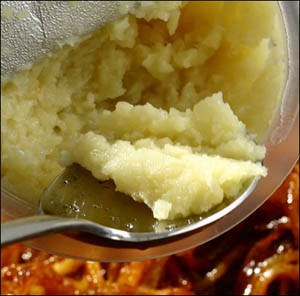
Example: Grated garlic (0.5)
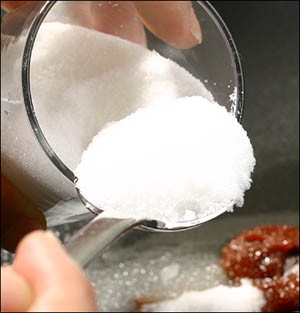
Example: Sugar (1)
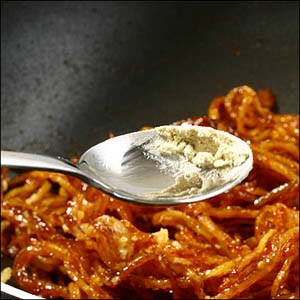
Example: Ginger powder (0.3)
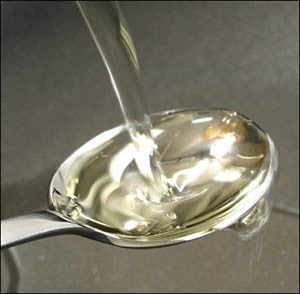
Example: Cooking oil (1)
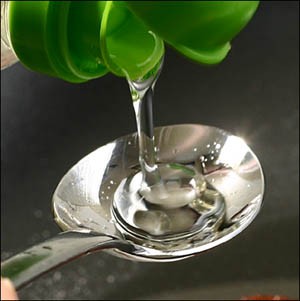
Example: Starch syrup (0.5)
Also, one paper cup is 200ml, and "1 handful" when measuring by hand means a light grasp of ingredients with one hand.
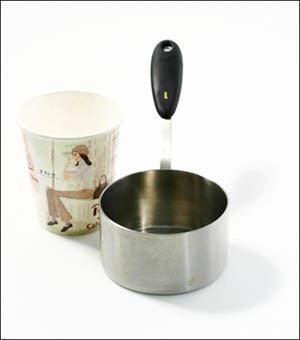
Example: 1 paper cup
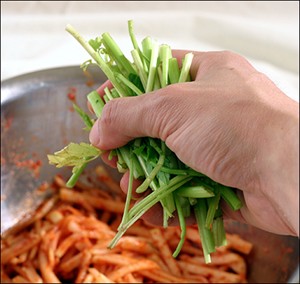
Example: 1 handful

![【宋家】一品のり缶 ギフトセット[8切x54枚(30g)X4缶入]](http://www.kankokuichiba.jp/cdn/shop/files/KS-4426-2405_9.jpg?v=1740377691&width=1100)
![【宋家】一品のり缶 ギフトセット[8切x54枚(30g)X2缶入]](http://www.kankokuichiba.jp/cdn/shop/files/KS-4427-240510_2.jpg?v=1740377693&width=1100)
![【宋家】一品のり缶 [8切x54枚(30g)]](http://www.kankokuichiba.jp/cdn/shop/files/KS-4424-2405_3.jpg?v=1740377695&width=1100)