
The Charm and History of Shabu-shabu
Shabu-shabu is a Japanese hot pot dish where the delicate flavors of the ingredients and the gentle taste of the warm broth exquisitely merge. Fresh vegetables and richly flavored meat are quickly blanched, bringing out the inherent taste of the ingredients to their fullest. This simple yet profound flavor continues to captivate many people. Shabu-shabu is a dish where the freshness of the ingredients directly translates to deliciousness, enriching the hearts of those who eat it.
The International Influence of Shabu-shabu
Japanese shabu-shabu made its way to Korea, and because Koreans prefer soup, they added kalguksu (wheat noodles) to this soup and seasoned it spicy. It seems to have become known as "Jingisukan." However, this dish is said to have originally started from a traditional cooking method called "Toryeom."
"Toryeom" is a cooking method where hot soup is repeatedly poured over rice or noodles and then removed, warming them up.
It is said that cooking vegetables and meat in water boiled in helmets on battlefields since the Three Kingdoms period was transmitted to Mongolia during the Goryeo Dynasty, and then crossed into Europe through Genghis Khan's continental conquests, becoming fondue. During the Sino-Japanese War, it came to Japan and became established as shabu-shabu. It seems that war creates new food cultures.
A New Relationship with Rain
It's been raining continuously. I used to dislike rain, but recently, for some reason, I've grown to like it.
Basic Shabu-shabu Recipe
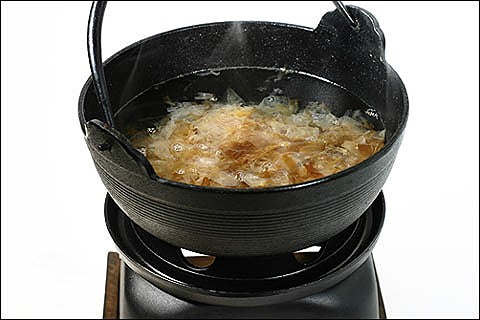
1. Add kombu to water (4 cups) and bring to a boil, then turn off the heat once and season with katsuobushi (1 handful) and usukuchi shoyu (1). After 10 minutes, strain it through a sieve to obtain a clear soup.
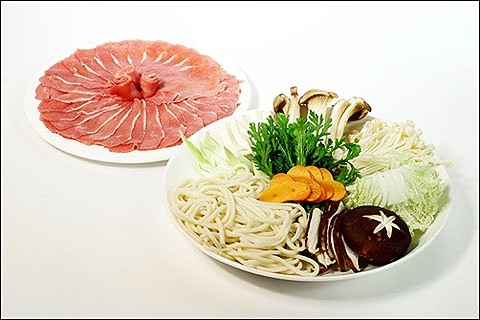
2. Prepare beef (300g for shabu-shabu), tofu, shiitake mushrooms, enoki mushrooms, bamboo shoots, and napa cabbage.
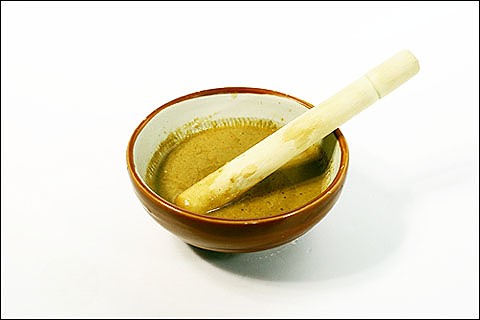
3. For the sesame sauce, mix ground sesame (6), bonito dashi (6), koikuchi shoyu (1), mirin (3), hot sauce (0.3), and grated garlic (0.1). [Hot sauce is optional~]
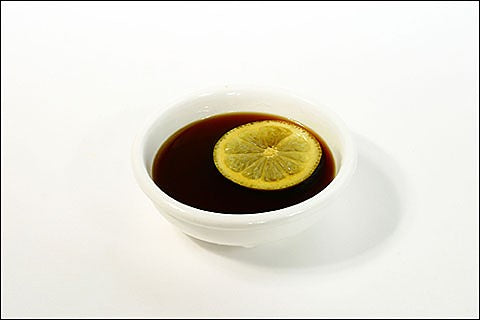
4. For the ponzu sauce, mix koikuchi shoyu (4), bonito dashi (6), mirin (4), vinegar (2), lemon juice (1), and hot sauce (0.3).

5. Heat the prepared bonito dashi, add vegetables, and dip them in ponzu sauce to eat.
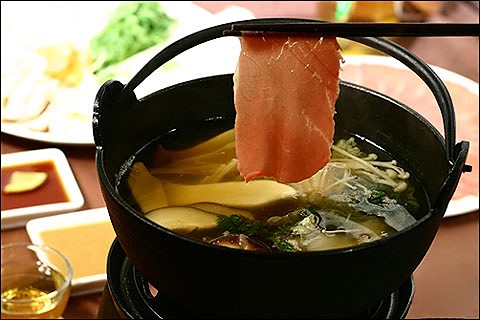
6. Briefly dip the beef in the broth, remove, and eat with sesame sauce.

7. Add udon, long green onions, garland chrysanthemum, grated garlic, chili powder, and pepper to the remaining soup and bring to a boil.

![【宋家】一品のり缶 ギフトセット[8切x54枚(30g)X4缶入]](http://www.kankokuichiba.jp/cdn/shop/files/KS-4426-2405_9.jpg?v=1740377691&width=1100)
![【宋家】一品のり缶 ギフトセット[8切x54枚(30g)X2缶入]](http://www.kankokuichiba.jp/cdn/shop/files/KS-4427-240510_2.jpg?v=1740377693&width=1100)

![【宋家】一品のり缶 [8切x54枚(30g)]](http://www.kankokuichiba.jp/cdn/shop/files/KS-4424-2405_3.jpg?v=1740377695&width=1100)